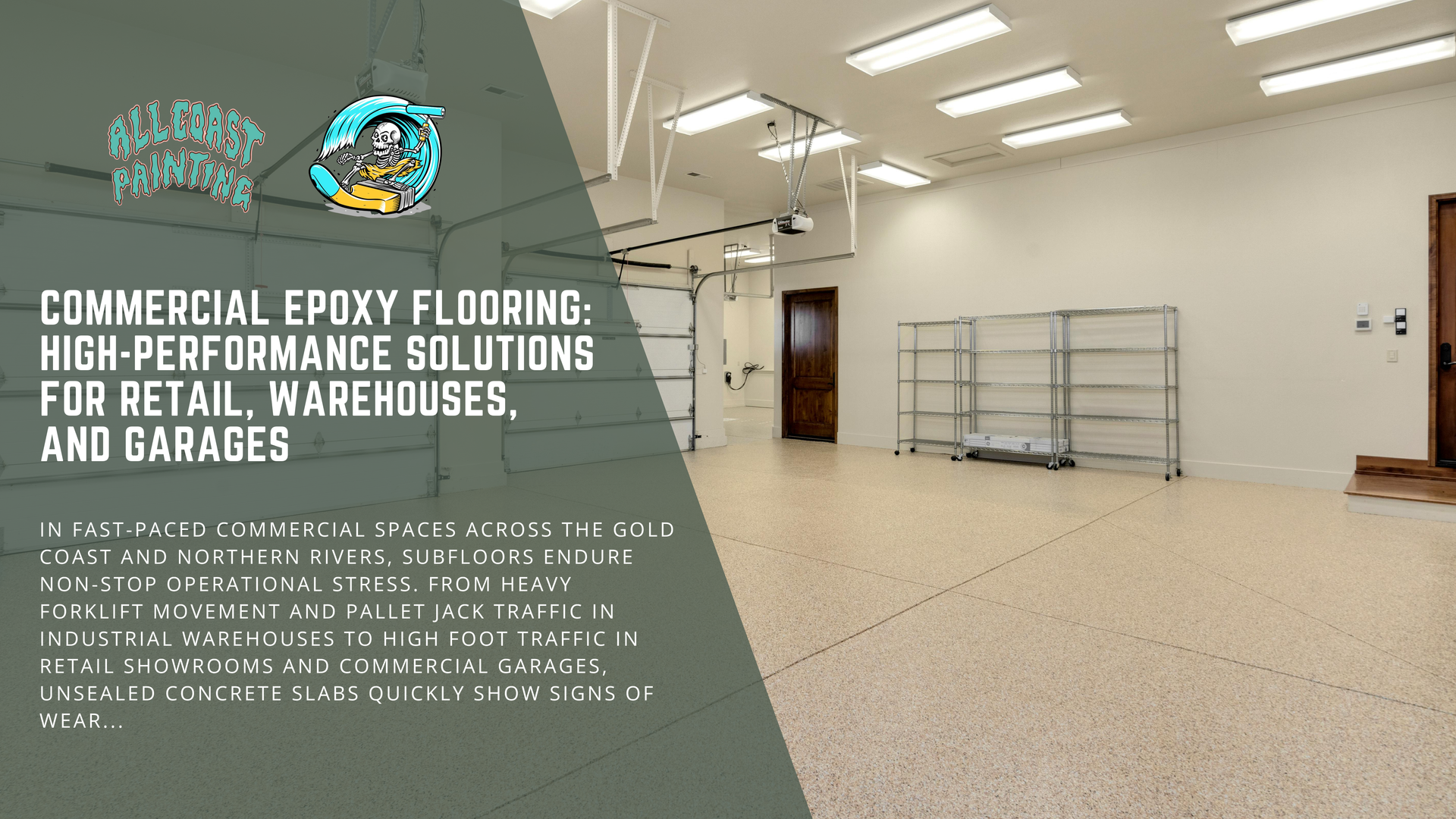
In fast-paced commercial spaces across the Gold Coast and Northern Rivers , subfloors endure non-stop operational stress. From heavy forklift movement and pallet jack traffic in industrial warehouses to high foot traffic in retail showrooms and commercial garages, unsealed concrete slabs quickly show signs of wear. Bare concrete is inherently porous and brittle at the surface. Without a protective barrier, constant friction causes concrete dusting, fine surface cracking, and deep chemical staining from vehicle oils or industrial cleaners. At All Coast Epoxy , we engineer trade-certified commercial resin systems that transform vulnerable slabs into high-durability, low-maintenance assets. Here is why modern commercial operators are upgrading to heavy-duty epoxy coatings. 1. Stopping Concrete Dusting and Mechanical Wear One of the most persistent issues in commercial warehouses and showrooms is concrete dusting. As heavy machinery and foot traffic grind across an unsealed slab, microscopic silica dust breaks free from the surface layer. This dust settles across inventory, sensitive equipment, and air filtration systems, creating an unhealthy workplace environment and requiring constant cleaning. Our commercial epoxy installation process stops dusting permanently. Through rigorous surface preparation , our team utilizes heavy-duty industrial diamond grinding to remove weak surface laitance and open the slab's capillaries. We then apply deeply penetrating primers and high-solids epoxy topcoats that lock the aggregate together, creating an unbreakable, dust-free surface. 2. Seamless Slip Resistance and Easy Maintenance In commercial retail zones and automotive workshops, safety and cleanliness go hand-in-hand. Traditional tiled or sectional floors feature seams and grout lines that collect dirt, oil, and moisture, making thorough sanitisation difficult. Our commercial epoxy resin cures into a single, continuous seamless epoxy floor . This eliminates dirt traps entirely, allowing maintenance teams to easily sweep, mop, or auto-scrub the surface in a fraction of the time. To ensure compliance with Australian workplace safety standards, we can integrate specialized anti-slip aggregates directly into the topcoat. This provides tailored traction in wet or high-oil areas without compromising the surface's cleanability, delivering an exceptionally hygienic flooring standard across your entire facility. 3. Professional Brand Aesthetics and Long-Term Value Your floor space plays a massive role in customer perception and brand authority. A cracked, oil-stained concrete floor projects a lack of care, whereas a polished, light-reflective commercial resin finish instantly modernizes your space. Available in a wide array of functional shades, vibrant safety markings, or modern warm neutrals , commercial epoxy enhances ambient light reflection, reducing the need for excess overhead lighting in large facilities. Finished with high-grade UV-stable coatings , our commercial floors resist discolouration, hot-tyre pick-up, and harsh chemical spills. Investing in a trade-certified resin system protects your underlying concrete substrate, lowers ongoing maintenance costs, and significantly boosts your building's market resale value . Protect Your Commercial Floor Asset Don't let cracked, dusting, or stained concrete compromise your business operations or staff safety. Partner with local specialists who deliver trade-certified commercial resin systems built for heavy use. Give Cory and the boys a buzz on 1300 017 204 today for your obligation-free commercial site inspection and surface consultation! 📞
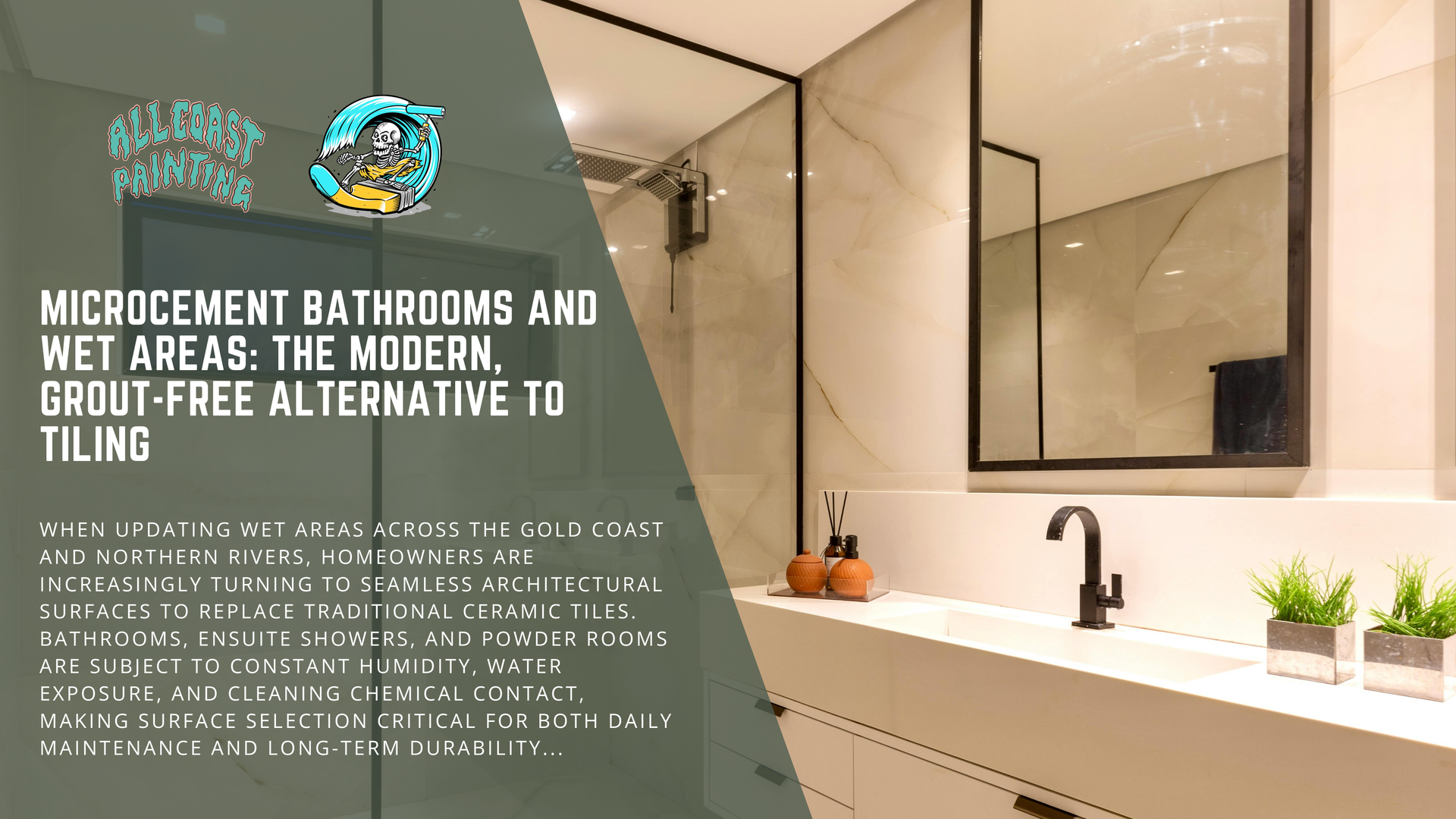
When updating wet areas across the Gold Coast and Northern Rivers , homeowners are increasingly turning to seamless architectural surfaces to replace traditional ceramic tiles. Bathrooms, ensuite showers, and powder rooms are subject to constant humidity, water exposure, and cleaning chemical contact, making surface selection critical for both daily maintenance and long-term durability. While tiling has historically been the standard choice, grout lines present persistent maintenance challenges in warm coastal environments. Microcement has emerged as the premier architectural alternative, offering a completely seamless, waterproof, and modern finish that transforms functional wet zones into luxury spa-like retreats. At All Coast Epoxy , we specialise in trade-certified microcement and specialist resin coatings designed to withstand high-moisture conditions while maintaining an elevated aesthetic. Here is why microcement is revolutionising coastal bathroom design. 1. Eliminating Grout Lines for Effortless Hygiene The primary vulnerability of traditional bathroom tiling lies in the grout. Grout is inherently porous, acting like a sponge for water, soap scum, body oils, and chemical residue. In subtropical climates, these recessed joins quickly develop unsightly black mould and stubborn mildew that require aggressive scrubbing and harsh chemicals to manage. Microcement eliminates this vulnerability entirely. Applied as a continuous, joint-free membrane across floors, walls, shower hobs, and custom vanity basins, microcement creates an unbroken, non-porous surface. Without seams or grout channels to trap organic waste, keeping wet areas pristine requires nothing more than a gentle wipe down with a mild pH-neutral cleaner, delivering an inherently hygienic flooring and wall solution. 2. Direct Application Over Existing Surfaces (Zero Demolition) Full bathroom strip-outs are notoriously disruptive, expensive, and time-consuming. Removing old tiles generates substantial dust, noise, and landfill waste, while risking structural damage to underlying wall sheets and timber framing. Because microcement exhibits exceptional tensile bond strength and minimal thickness (typically 2mm to 3mm), our technical team can apply it directly over sound existing tiles, rendered masonry, or moisture-resistant compressed sheeting following thorough surface preparation . Our application process includes mechanical profiling, embedding flexible anti-crack fiberglass mesh, and applying specialised primers engineered to form a permanent bond with the substrate. This allows for a complete aesthetic transformation without the stress, noise, and expense of traditional demolition. 3. Tactile Coastal Design and Long-Term Asset Protection Microcement offers a refined, hand-troweled finish reminiscent of Venetian plaster or polished concrete, bringing soft texture and visual depth to modern interiors. Available in a curated range of earthy warm neutrals , soft sands, and muted slate tones, it pairs effortlessly with timber accents, brushed brass fixtures, and natural stone. To ensure long-term durability in wet zones, every installation is sealed with high-performance waterproof membrane topcoats and UV-stable coatings . This protective barrier prevents moisture penetration, resists staining, and guards against surface discolouration from sunlight exposure. Upgrading your home with a bespoke, trade-certified microcement finish creates a striking architectural feature that modernises your entire floor plan while significantly enhancing your property's overall resale value . Upgrade Your Bathroom to Seamless Luxury Say goodbye to mouldy grout lines and dated tile patterns. Partner with local trade specialists who deliver seamless microcement finishes built for coastal conditions. Give Cory and the boys a buzz on 1300 017 204 today for your obligation-free site inspection and design consultation! 📞
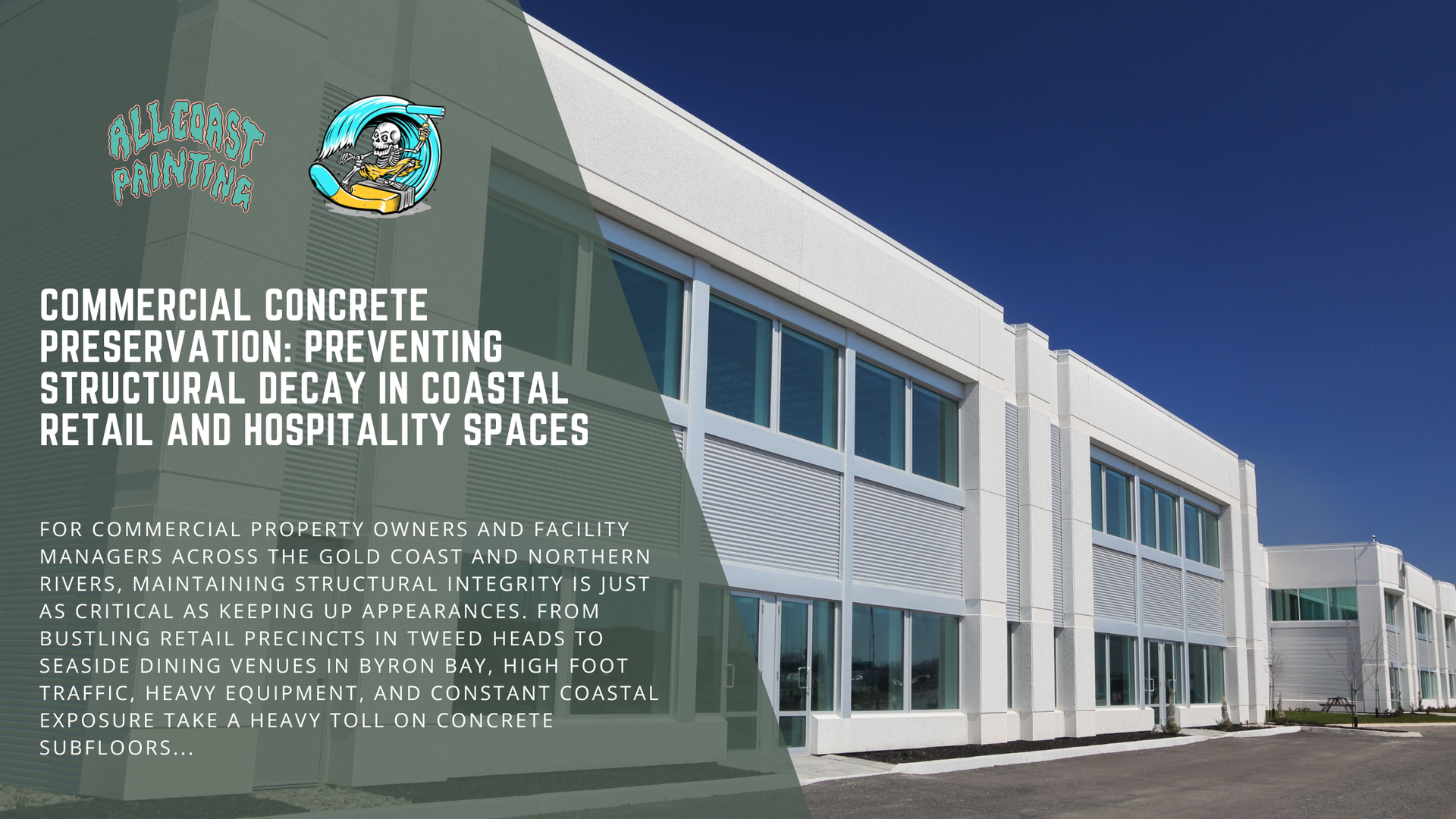
For commercial property owners and facility managers across the Gold Coast and Northern Rivers , maintaining structural integrity is just as critical as keeping up appearances. From bustling retail precincts in Tweed Heads to seaside dining venues in Byron Bay, high foot traffic, heavy equipment, and constant coastal exposure take a heavy toll on concrete subfloors. Unprotected concrete is not as indestructible as it looks. In marine environments, moisture, airborne salts, and commercial chemical spills rapidly penetrate untreated slabs, leading to deep structural decay, surface spalling, and costly operational downtime. At All Coast Epoxy , we specialise in commercial-grade resin systems and concrete preservation coatings engineered to defend against heavy industrial wear and aggressive coastal elements. Here is why proactive slab protection is essential for your commercial footprint. 1. Stopping Salt-Induced Corrosion and Concrete Cancer Commercial slabs located near the coastline absorb airborne salt fog and moisture through their porous capillary networks. When salt particles reach the internal steel reinforcement bars embedded within the concrete, a destructive oxidation process begins. As the steel reinforcement corrodes, it expands up to six times its original volume. This internal pressure fractures the surrounding concrete from within, causing deep cracking, surface spalling, and structural failure (commonly known as concrete cancer). Our commercial preservation process stops moisture migration at the surface. Through thorough surface preparation , we utilise heavy-duty industrial diamond grinding to strip away weak laitance and open the slab's pore structure. We then apply deeply penetrating primers and commercial resin membranes that completely seal the capillaries, locking out moisture and airborne salts to protect your steel reinforcement for decades. 2. Chemical Resistance and High-Traffic Wear Commercial venues face daily exposure to damaging substances that standard concrete sealers simply cannot resist. Hot cooking fats in restaurants, harsh cleaning detergents, vehicle fluids in loading bays, and constant foot traffic erode unsealed concrete, causing dusting and unsightly staining. When unsealed concrete dusting occurs, fine silica particles settle across merchandise, kitchen equipment, and air filtration systems, creating health hazards and ongoing maintenance headaches. We apply high-solids, seamless commercial resin systems that form a non-porous, chemically inert barrier over the entire floor. The resulting seamless epoxy floor absorbs heavy impact and resists chemical spills, providing an easily sanitised, hygienic flooring solution that withstands the toughest operational conditions. 3. Protecting Business Continuity and Resale Value Ignoring early concrete degradation leads to severe structural repair costs and forced business closures down the line. Patching spalled concrete or replacing failing floor coverings during peak trading periods creates noise, dust, and lost revenue. Investing in a trade-certified commercial resin application protects your underlying building envelope, ensuring full compliance with Australian workplace safety and health standards. Finished with high-grade UV-stable coatings in modern warm neutrals or slate tones, your commercial space retains a clean, professional aesthetic that enhances brand positioning and significantly boosts your building's overall market resale value . Secure Your Commercial Slab Today Don't let unseen concrete decay turn into an expensive structural repair bill or operational headache. Partner with local trade specialists who understand commercial compliance and industrial surface protection. Give Cory and the boys a buzz on 1300 017 204 today for your obligation-free commercial site inspection and surface consultation! 📞
With seamless interior surfaces taking over the Gold Coast and Northern Rivers design scene, property owners are increasingly moving away from traditional tiled floors. Eliminating grout lines is the ultimate way to beat coastal mould, streamline cleaning, and create a sleek, contemporary layout. However, when deciding on the best non-porous finish for your property, two major trade-certified options lead the market: microcement and epoxy flake flooring . While both offer complete protection against moisture, they serve very different functional and aesthetic roles. At All Coast Epoxy , we specialise in installing both systems. Here is how to choose the right seamless finish for your specific living or commercial space. 1. Microcement: The Velvet-Smooth Architectural Statement If you are aiming for a minimalist, high-end plaster look across living room floors, feature walls, or full bathroom wet areas, microcement is unmatched. Unlike traditional concrete, microcement is an ultra-thin, polymer-modified coating hand-troweled over existing substrates. It delivers a tactile, organic finish reminiscent of Venetian plaster, making it ideal for low-to-medium foot traffic zones where aesthetic luxury is the main goal. Best Suited For: Bathrooms, shower walls, kitchen splashbacks, feature walls, and internal living floors. Aesthetic Appeal: Soft, hand-crafted textures in earthy warm neutrals , light linens, and concrete greys. Key Advantage: Applies directly over existing sound tiles with minimal floor height buildup, eliminating messy demolition work. 2. Epoxy Flake: Heavy-Duty Industrial Strength Where microcement brings architectural elegance, epoxy flake brings raw durability. This multi-layer system combines heavy-duty base resin with decorative vinyl flakes, finished under a crystal-clear protective topcoat. It is engineered specifically for high-impact zones that face vehicle traffic, heavy machinery, chemical spills, or high foot-traffic wear. The embedded flake matrix creates a subtle texture that naturally masks dirt and provides built-in slip resistance. Best Suited For: Garages, workshops, commercial kitchens, outdoor patios, and high-volume retail floors. Aesthetic Appeal: Granite-style, speckled finishes that offer high contrast and conceal daily scuffs. Key Advantage: Extreme impact resistance, hot-tyre pick-up protection, and effortless pressure-wash maintenance. 3. Preparation Makes the Perfection Regardless of whether you choose the architectural elegance of microcement or the rugged strength of epoxy flake, long-term performance relies entirely on proper surface preparation . Our team utilizes professional industrial diamond grinding to profile the underlying concrete slab, removing weak laitance and opening the substrate capillaries. We then apply specialized primers that anchor the new surface directly to the concrete. Sealing either system with high-grade UV-stable coatings protects against sun discolouration, delivering a seamless, hygienic flooring asset that elevates your interior design while boosting your property's overall resale value . Find the Perfect Seamless System for Your Home Not sure whether microcement or epoxy flake is the right match for your upcoming project? Let our team inspect your slab and recommend the ideal trade-certified solution. Give Cory and the boys a buzz on 1300 017 204 today for your obligation-free site inspection and surface consultation! 📞
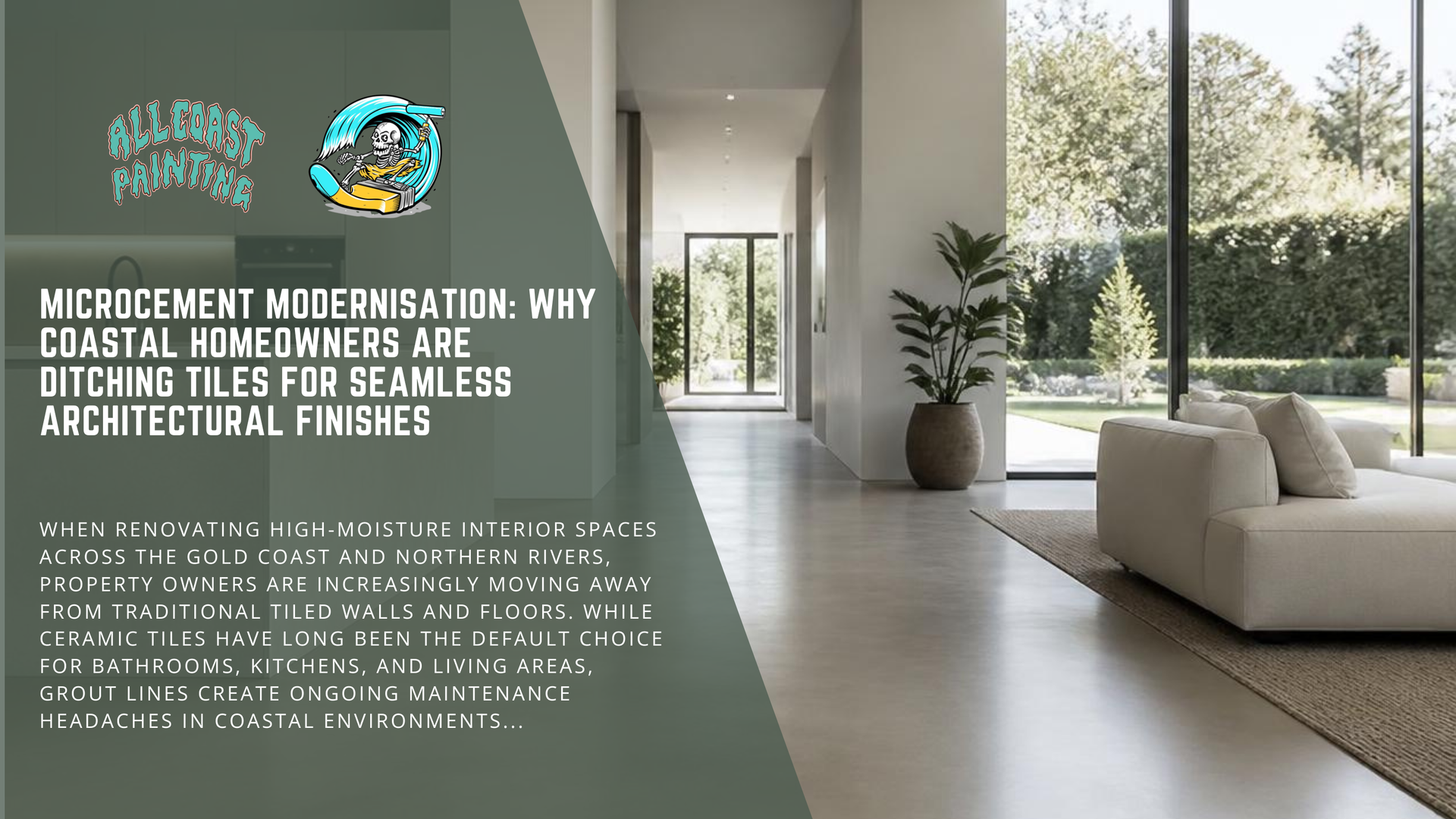
When renovating high-moisture interior spaces across the Gold Coast and Northern Rivers , property owners are increasingly moving away from traditional tiled walls and floors. While ceramic tiles have long been the default choice for bathrooms, kitchens, and living areas, grout lines create ongoing maintenance headaches in coastal environments where humidity and salt air encourage mould growth. Enter microcement : an ultra-thin, polymer-modified cementitious coating that creates a smooth, continuous surface over existing substrates. Whether you are aiming for a minimalist concrete aesthetic or a soft plaster finish, microcement delivers unmatched modern luxury without the grout. At All Coast Epoxy , we apply trade-certified microcement and resin systems engineered specifically for coastal conditions. Here is why this architectural finish is quickly becoming the region's preferred alternative to traditional tiling. 1. Zero Grout Lines for Ultimate Hygiene The primary drawback of tiled surfaces is the grout. Grout is inherently porous, absorbing soap scum, body oils, water, and cleaning chemicals over time. In warm coastal climates, these recessed joins quickly turn into dark breeding grounds for black mould and bacteria. Microcement creates a completely unbroken, non-porous membrane across floors, walls, shower stalls, and benchtops. Without seams or grout lines to trap organic waste, keeping wet areas sterile requires nothing more than a simple wipe down with pH-neutral cleaner. 2. Applied Directly Over Existing Tiles (Zero Demolition) Traditional bathroom and kitchen strip-outs are noisy, messy, and expensive. Tearing up existing tiles generates substantial landfill waste, risks structural timber damage, and extends project downtime by weeks. Because microcement boasts incredible tensile strength and adhesion, our team can apply it directly over your existing sound tiles, concrete slabs, or compressed sheet flooring after thorough surface preparation . Our installation process involves heavy-duty mechanical profiling, flexible mesh embedding, and specialized primers that bond permanently to the existing substrate. This eliminates costly demolition work while drastically reducing project completion timelines. 3. Architectural Versatility and Resale Value Beyond its practical hygiene benefits, microcement offers extraordinary design flexibility. Available in an array of earthy warm neutrals , soft greys, and custom coastal tones, it creates a tactile, hand-troweled finish that complements modern luxury interiors. When sealed with high-performance, waterproof, and UV-stable coatings , microcement maintains its structural integrity and colour clarity without yellowing or cracking under direct sun exposure. Upgrading your bathrooms, feature walls, or commercial floors with a seamless architectural finish transforms tired spaces into high-end design assets, delivering a dramatic boost to your property's overall market resale value . Upgrade to Seamless Coastal Modernity Don't let outdated tiles and mouldy grout lines drag down your home's aesthetic appeal or daily maintenance routine. Partner with local specialists who deliver trade-certified, seamless plaster and resin finishes engineered to endure. Give Cory and the boys a buzz on 1300 017 204 today for your obligation-free site inspection and professional design consultation! 📞
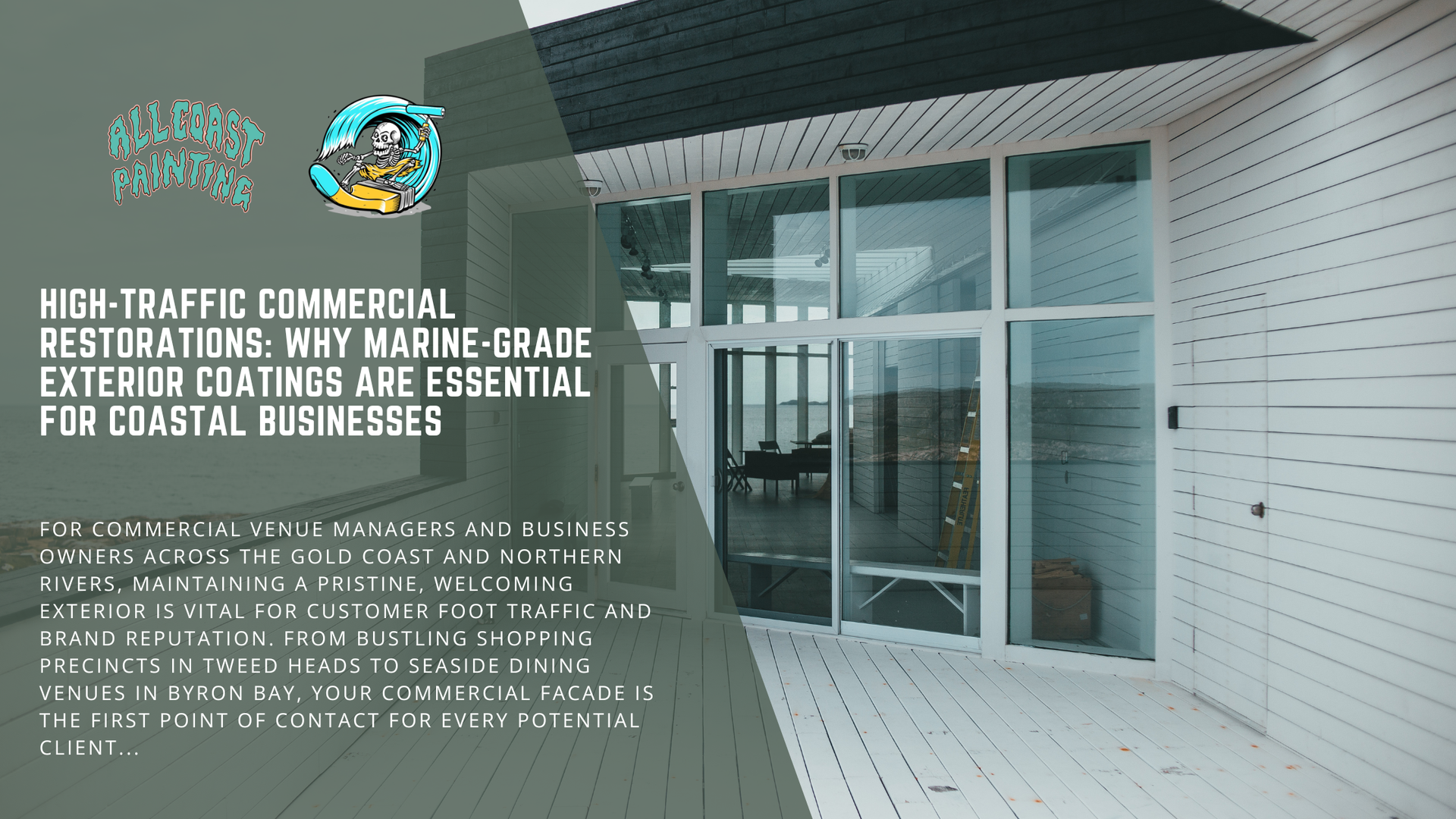
For commercial venue managers and business owners across the Gold Coast and Northern Rivers , maintaining a pristine, welcoming exterior is vital for customer foot traffic and brand reputation. From bustling shopping precincts in Tweed Heads to seaside dining venues in Byron Bay, your commercial facade is the first point of contact for every potential client. However, operating a commercial building in a subtropical coastal environment poses severe challenges. High foot traffic, heavy vehicle exhaust, persistent salt fog, and intense UV exposure cause standard commercial paints to chalk, scuff, and discolour at an alarming rate. At All Coast Painting , we specialise in high-performance commercial painting solutions designed to withstand high-volume public use and harsh marine weather. Here is why investing in trade-certified, marine-grade commercial coating systems is the ultimate strategy for protecting your business footprint. 1. Combating Salt-Fog Chalking and Atmospheric Oxidation Commercial properties situated within a few kilometres of the coastline endure relentless exposure to airborne salt particles. Combined with high subtropical humidity, salt deposits react under direct sunlight to break down standard paint resins. This chemical breakdown leads to chalking, a condition where the paint degrades into a powdery residue. Beyond making your building look faded and neglected, chalking transfers onto patrons' clothing and allows underlying steel and concrete structures to corrode. Our commercial application process addresses environmental degradation at the root. Through comprehensive surface preparation , we high-pressure wash away salt crusting and industrial pollutants, treat surface oxidation on architectural metalwork, and apply high-grip, anti-corrosive primers. We then apply high-build commercial coatings such as premium Dulux Solagard painting lines. Engineered with robust acrylic polymers, these systems resist salt entrapment, prevent surface chalking, and ensure your brand colours stay vibrant for years. 2. High-Traffic Resistance and Active Mould Prevention Commercial exteriors experience physical wear and tear that residential homes rarely face. Delivery equipment, alfresco dining furniture, outdoor signage, and daily public contact quickly mark lower wall zones, while shaded awnings and entryways attract unsightly black mould growth. Using basic exterior paints in high-volume areas leads to constant scuffing, staining, and costly recurring maintenance schedules. We safeguard vulnerable commercial walls by applying durable, washable elastomeric membranes infused with advanced anti-mould paint technology. This creates an impermeable, scuff-resistant barrier that allows your maintenance team to wash away grime, grease, and public scuff marks without eroding the underlying paint finish. 3. Elevating Brand Authority and Commercial Resale Value An architecturally refreshed commercial facade serves as a permanent, 24/7 advertisement for your operations. Upgrading tired color schemes with modern, sophisticated warm neutrals , slate grey, or rich monument tones elevates your brand positioning and attracts high-value clientele. Furthermore, applying premium UV-stable coatings protects display windows, structural columns, and covered walkways from fading under extreme sun exposure. Proactively protecting your property against concrete spalling, structural timber decay, and metal corrosion preserves your building envelope. Choosing a trade-certified commercial coating system is a highly strategic investment that ensures business continuity, lowers long-term operational costs, and significantly boosts your commercial property's overall resale value . Upgrade Your Commercial Property Today Don't let a faded, scuffed, or weather-damaged facade compromise your business reputation. Partner with local commercial painting specialists who deliver durable, trade-certified finishes engineered for the coastal climate. Give Cory and the boys a buzz on 1300 017 204 today for your obligation-free commercial site assessment and professional colour consultation! 📞
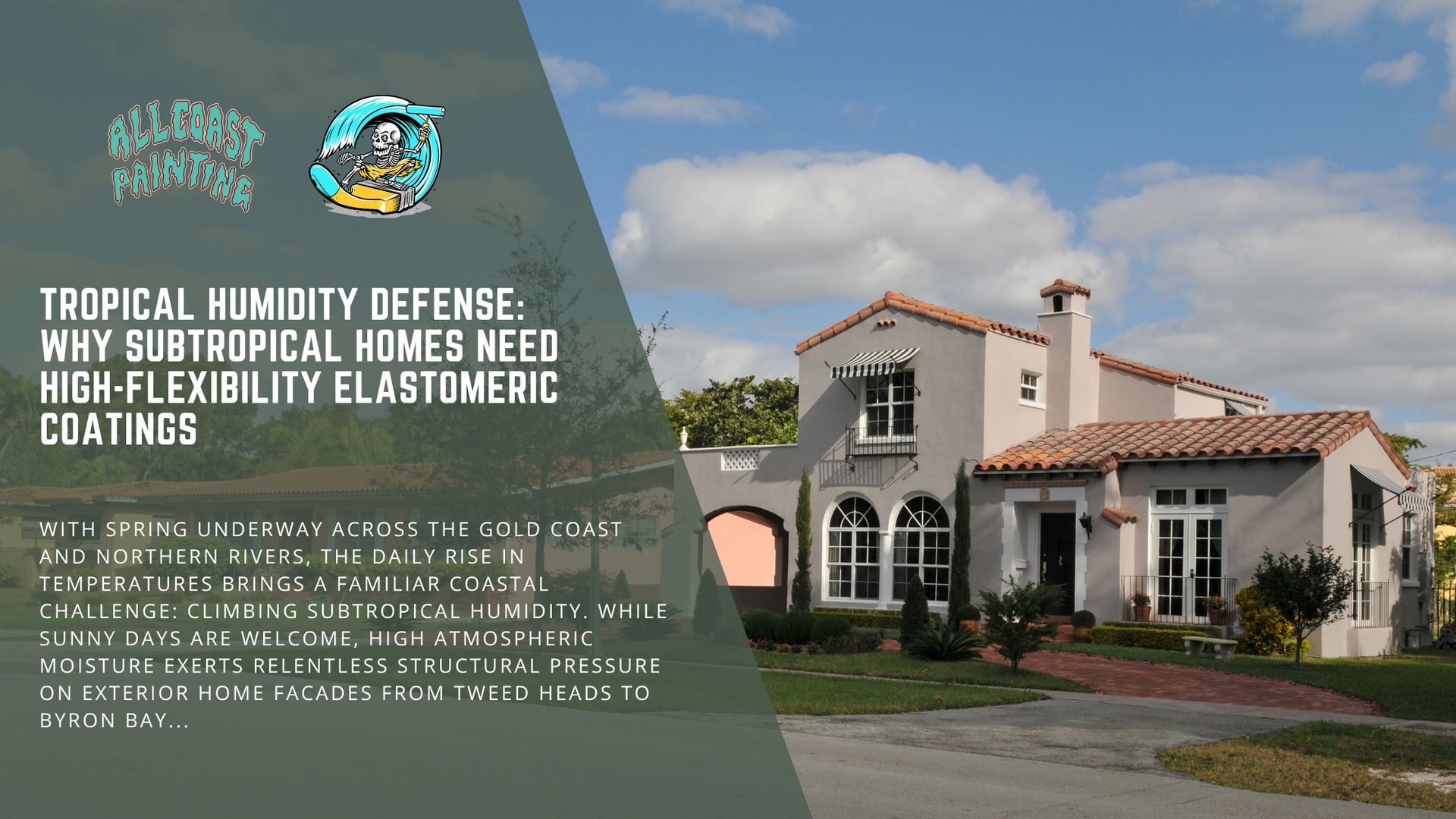
With spring underway across the Gold Coast and Northern Rivers , the daily rise in temperatures brings a familiar coastal challenge: climbing subtropical humidity. While sunny days are welcome, high atmospheric moisture exerts relentless structural pressure on exterior home facades from Tweed Heads to Byron Bay. When high humidity combines with intense UV exposure, standard exterior paints quickly lose their elasticity. As a result, rendered walls and timber weatherboards develop microscopic hairline cracks that allow damp air and rainwater to seep into your building envelope. At All Coast Painting , we help property owners protect their structures with advanced, high-flexibility elastomeric and membrane coating systems. Here is why high-humidity environments demand specialised protective coatings and how they keep your property weather-tight year-round. 1. Thermal Expansion and Hydrostatic Pressure Subtropical weather causes building materials to constantly move. Concrete render, timber weatherboards, and masonry expand during hot afternoons and contract when cooler coastal breezes roll in at night. Standard, rigid exterior paints cannot accommodate this continuous micro-movement. Over time, the stiff paint film fractures, creating fine structural cracks. High humidity then forces moisture vapour into these fissures. When the sun heats the walls the next day, that trapped moisture turns into steam vapour, creating hydrostatic pressure from behind the paint. This pressure causes unsightly blistering, bubbling, and large-scale paint peeling across rendered surfaces. 2. High-Flexibility Membranes: Bridging the Gap To combat constant substrate movement, we utilise high-performance elastomeric coatings and premium Dulux Solagard painting systems. Unlike standard paints, elastomeric coatings are formulated with high-tech acrylic polymers that give the film remarkable elasticity. An elastomeric coating can stretch and contract significantly without breaking its bond or cracking. It acts like an impermeable, protective skin over your entire rendered or masonry home. The coating stretches across hairline cracks as the substrate moves, bridging structural gaps and blocking wind-driven rain and airborne humidity from penetrating the wall. Crucially, these advanced coatings remain vapour-permeable from the inside, allowing internal moisture to escape safely without blowing out the paint finish. 3. Comprehensive Surface Prep and Long-Term Value Applying a flexible membrane over an unprepared or damp surface will guarantee early failure. A long-lasting finish depends entirely on thorough surface preparation . Our team begins by pressure washing away salt crusting, dirt, and winter environmental pollutants. We treat any existing fungal spores with commercial-grade cleaning agents and seal active cracks with high-flexibility fillers before applying specialized primers. Integrating anti-mould paint technology directly into our topcoats prevents black mould and algae from feeding on trapped humidity in shaded elevations. Combined with high-grade UV-stable coatings in modern warm neutrals , this comprehensive application ensures your home maintains a pristine appearance that boosts your property's overall resale value . Shield Your Property Against Coastal Humidity Don't wait for rising humidity and summer downpours to cause bubbling paint and internal dampness on your walls. Protect your home with a flexible, trade-certified membrane system built for coastal conditions. Give Cory and the boys a buzz on 1300 017 204 today for your obligation-free exterior condition assessment and professional colour consultation! 📞
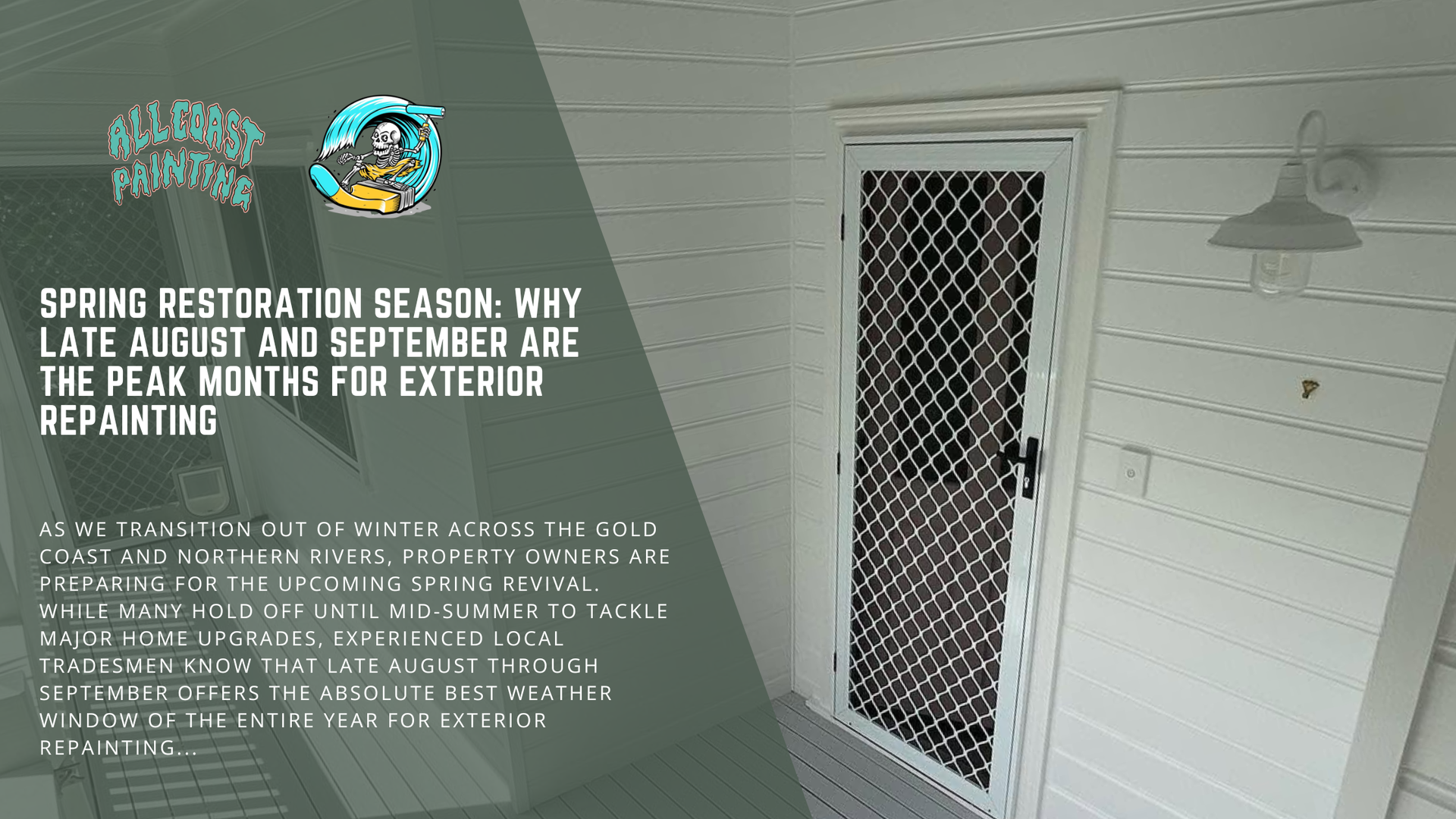
Spring Restoration Season: Why Late August and September Are the Peak Months for Exterior Repainting
As we transition out of winter across the Gold Coast and Northern Rivers , property owners are preparing for the upcoming spring revival. While many hold off until mid-summer to tackle major home upgrades, experienced local tradesmen know that late August through September offers the absolute best weather window of the entire year for exterior repainting. Waiting until the height of summer brings extreme heatwaves, high humidity, and afternoon tropical downpours—all of which severely disrupt paint curing and surface adhesion. At All Coast Painting , we recommend taking advantage of the early spring climate to restore your weatherboards, render, and roof before the summer humidity sets in. Here is why scheduling your exterior restoration now guarantees a superior, long-lasting finish. 1. Ideal Curing Temperatures and Low Humidity Paint does not simply dry; it cures through a delicate chemical cross-linking process. When exterior paint is applied under the intense, 30°C+ summer sun, the top layer dries too quickly while the moisture underneath remains trapped. This leads to blistering, brush marks, and premature peeling. Late winter and early spring provide mild daytime temperatures (typically between 18°C and 24°C) combined with significantly lower relative humidity. This stable environment allows topcoats like premium Dulux Solagard painting lines to dry evenly from the substrate outward. The result is an ultra-smooth, high-adhesion film that forms an unbreakable protective barrier against the elements. 2. Capitalising on Spring Renovations and "Quiet Luxury" Trends Spring is traditionally the peak season for real estate listings across the coastal corridor. Whether you are preparing your home for the market or simply upgrading your private living space, a fresh exterior repaint delivers the highest return on investment of any cosmetic renovation. Current architectural design trends across coastal properties are shifting away from stark, clinical whites in favour of earthy warm neutrals , soft linen tones, and muted sage greens. By pairing these modern palettes with high-grade UV-stable coatings , we protect your facade from harsh sunlight, keeping your home looking sharp and modern. Taking action before the spring rush ensures you secure prime trade scheduling without weather delays, giving your property a massive boost in curb appeal and overall market resale value . 3. Pre-Storm Season Defense and Mould Eradication Winter moisture often leaves behind hidden fungal spores in shaded eaves, timber weatherboards, and south-facing rendered walls. If left untreated, these spores multiply rapidly as temperatures rise, creating unsightly black mould patches under your new paint layer. Proactive early spring maintenance starts with comprehensive surface preparation . Our team pressure-washes away winter salt build-up, treats deep-seated fungal spores with commercial-grade cleaning agents, and seals all hairline timber and render cracks. Integrating specialised anti-mould paint technology into our protective coating layers creates an active barrier against fungal regrowth, ensuring your home remains clean, healthy, and completely weather-tight before the tropical summer storm season arrives. Secure Your Spring Exterior Refresh Don't wait for the mid-summer heat and storm delays to book your home's exterior transformation. Beat the spring rush and give your property a trade-certified finish built to endure the elements. Give Cory and the boys a buzz on 1300 017 204 today for your obligation-free exterior condition assessment and professional colour consultation! 📞
Across the vibrant commercial hubs of the Gold Coast and Northern Rivers , first impressions dictate commercial success. Whether you operate a seaside café in Coolangatta, a boutique retail precinct in Tweed Heads, or a busy hotel in Byron Bay, your property’s exterior facade communicates your operational standards to every passing customer. However, running a commercial venue in a subtropical marine environment presents severe maintenance challenges. High foot traffic, constant salt air, severe storms, and relentless sub-tropical UV exposure cause standard commercial paints to chalk, stain, and peel rapidly. At All Coast Painting , we specialize in high-performance commercial painting solutions engineered to withstand heavy public use and extreme weather. Here is why local venue managers rely on marine-grade commercial coating systems to protect their business assets. 1. Stopping Salt-Spray Oxidation and Surface Chalking Coastal commercial properties located within a few kilometres of the ocean face continuous salt-fog exposure. Airborne salt deposits settle on exterior walls, window frames, and structural steel elements, where they react under intense heat to break down basic paint binders. When lower-tier paints break down, they undergo chalking (a powdery residue that rubs off on patrons' clothes and leaves streaky, faded walls). This rapid aesthetic decline damages brand perception and signals neglected maintenance to visitors. Our commercial application process addresses marine exposure at the foundation. Through rigorous surface preparation , we high-pressure wash away salt crusting and industrial pollutants, treat surface oxidation, and apply high-grip, anti-corrosive primers. We then apply flexible, heavy-duty topcoats such as premium Dulux Solagard painting lines. Formulated with resilient acrylic polymers, these commercial coatings resist salt entrapment, prevent chalking, and keep your venue's colours vibrant year after year. 2. High-Traffic Durability and Mould Resistance Commercial facades endure physical impacts that residential properties rarely experience. Delivery trolleys, dining chairs, luggage, and constant public contact scuff lower wall zones, while high humidity encourages unsightly black fungal growth on shaded exterior walls and awnings. Using standard interior or low-build exterior paints in commercial high-traffic areas leads to constant scuffing, staining, and costly repainting schedules. We protect vulnerable wall surfaces by applying high-build, washable commercial membranes integrated with advanced anti-mould paint technology. This creates an impermeable, scuff-resistant barrier that allows staff to easily wash away dirt, food grease, and public scuff marks during daily cleanup routines without wearing down the paint finish or dulling the colour. 3. Elevating Brand Identity and Commercial Resale Value A freshly painted, architecturally modern commercial facade acts as a permanent, 24/7 billboard for your business. Transitioning away from outdated schemes in favour of contemporary coastal palettes, like sophisticated warm neutrals , slate, and charcoal, elevates your brand positioning and attracts premium clientele. Furthermore, applying premium, commercial-grade UV-stable coatings protects your exterior from premature sun fading under large display windows and alfresco areas. Proactively protecting your building's structural substrate prevents costly concrete spalling, timber rot, and steel corrosion. Choosing a trade-certified commercial coating system is a highly strategic investment that protects operational continuity, lowers long-term maintenance costs, and significantly boosts your commercial property's overall market resale value . Upgrade Your Commercial Facade Don't let a tired, scuffed, or weather-beaten exterior undermine your venue's commercial appeal. Partner with local commercial painting specialists who deliver durable, trade-certified finishes built for coastal conditions. Give Cory and the boys a buzz on 1300 017 204 today for an obligation-free commercial site assessment and professional colour consultation! 📞
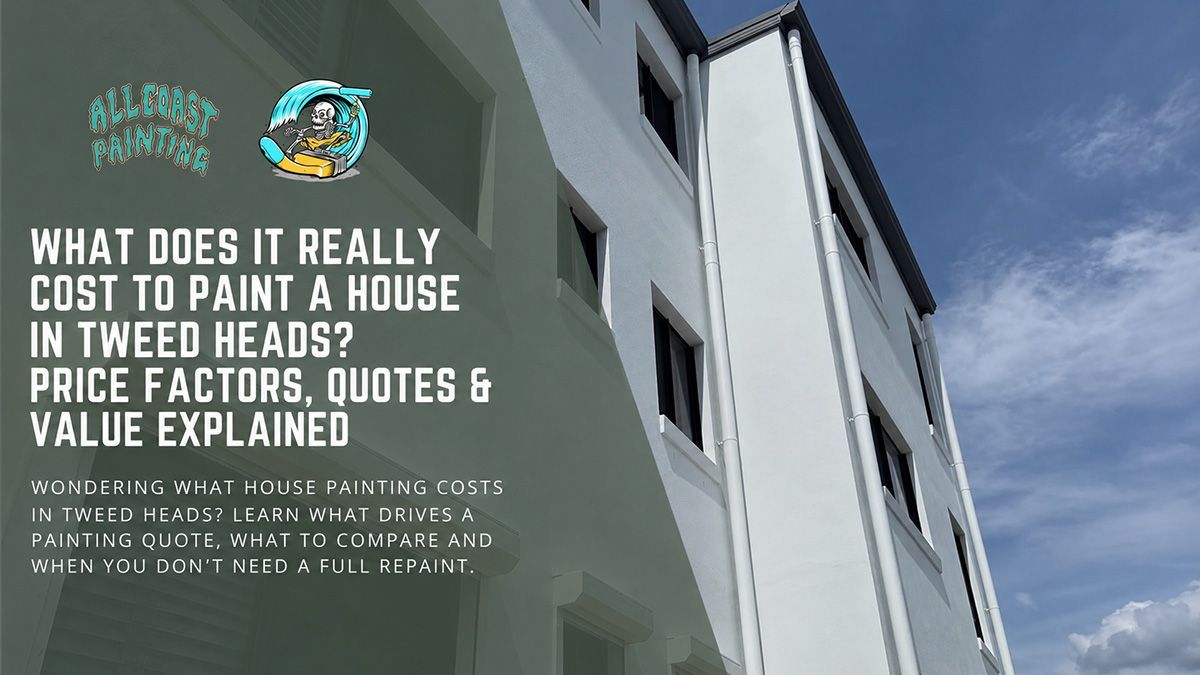
Wondering what house painting costs in Tweed Heads? Learn what drives a painting quote, what to compare and when you don't need a full repaint.